Oracle Card
“The Sign Seeker”

This card represents symbolism in observation. The universe is speaking to you in subtle ways; look to the world around you for symbolic messages and listen to your intuition to decipher its hidden meaning—you might just find an answer to your question.
Meaning: When I was a child, I developed a panic disorder that highly complicated my day-to-day activities, especially so when I was in school. In order to ease my anxiety, I tried elaborating different techniques, and one of these became trying to find “signs” in the mundanity of day-to-day which would signify that I would be alright. Throughout my high school years, when my stress levels were especially severe, I carried a journal in which I wrote down every sign I encountered: finding a quarter on the sidewalk, finding a flower that looked like a four-leaf clover, seeing the clock sitting on “angel numbers” such as 4:44, or seeing luck-imbued birds, like magpies, on my way to class. Today, I have accepted and adapted to my condition. Nevertheless, I wanted to create the oracle card that I would have wanted to see when I was younger. To do this, I have inserted some of the common signs I would indicate in my journal, as well as the original writings on them, onto the card. It is my way of symbolically telling my past self that everything will be alright, no matter what.
Crit One
Work in Progress Bundle
Character
Harold
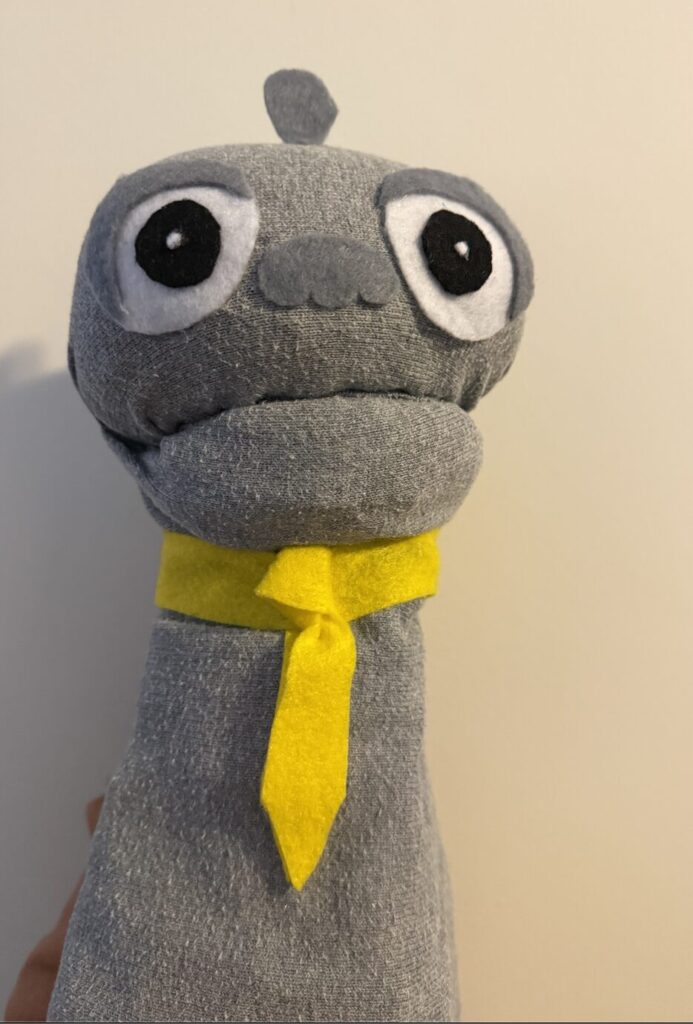
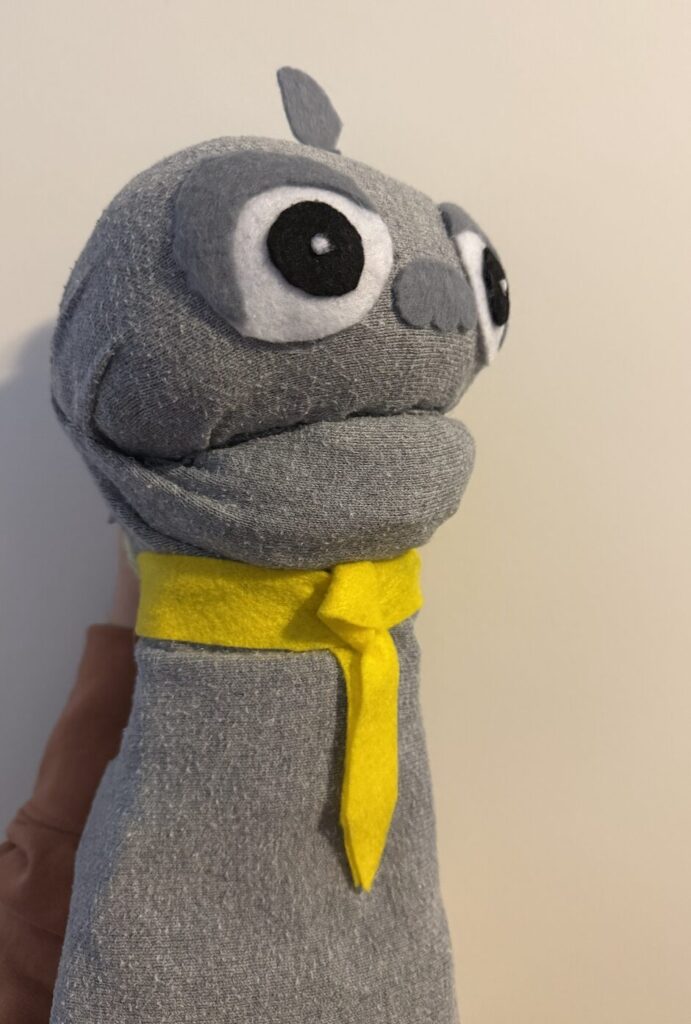
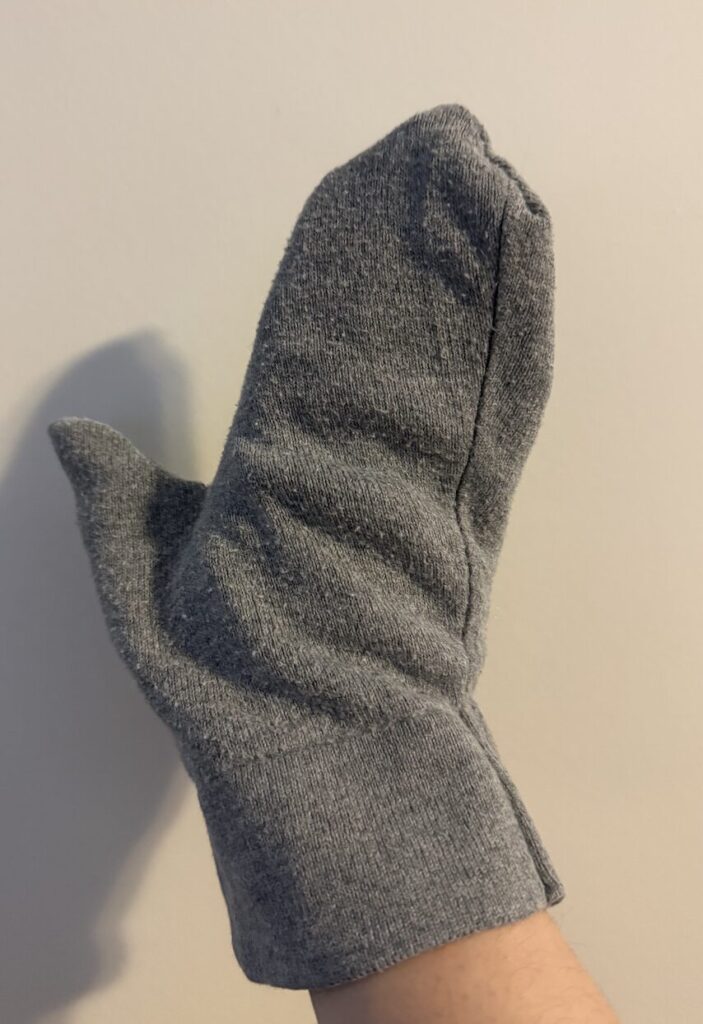
Harold is a puppet who acts as the mascot for the company’s training and orientation videos. Dull and rugged, it is evident that he has occupied this position for a long time, acting as a sort of pull-out-the-basement-when-we-need-him character; this can most widely be seen from his visual adherence to typical 70s puppets seen on cable TV. As a result of his long-standing employment, he has been drained of much of his personality. In such, he represents the company’s unwavering commitment at adhering to guidelines, regardless of how much this might dampen the spirits of employees. His serious personality stands in stark contrast with his colleagues’ often absurd behaviour, thereby exposing his own ridiculousness and that of the office environment by illustrating how rigidity can transform individuals into a conformist group devoid of personality.
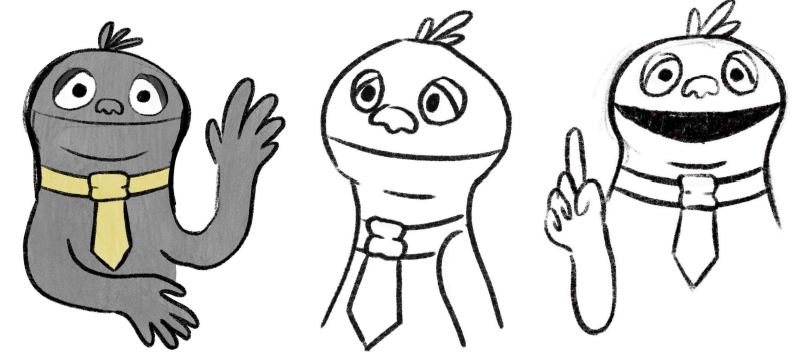
Harold is inspired by the common trope of employing puppets as moral commentators on cable television. In particular, they are frequently utilized for their ability to represent the “everyman,” serving as a means of softening complex and challenging subjects. This enables them to be used as critique without any substantial consequences. Leveraging this idea, I wanted to develop a character that was aware of their own ability to present anything as “acceptable,” while also being evidently flawed, actually revealing the underlying systematic problems of the institution.
Harold’s function in the television episode is to serve as a stabilizing force of “normality;” his efforts to ensure that his coworkers comply with office rules and regulations mirror the contemporary reality in any workplace, where employees are often compelled to suppress their authentic selves in favour of rigid conformity. By serving as a force that moderates the comedic tone of the episode, while simultaneously exposing the harsh and self-destructive expectations prevalent in the workplace, his presence creates a satirical commentary. He is able to show the ridiculous nature by which employees are frequently required to detach themselves from their individuality to fit into a standardized, monotonous, and identity-deficient environment where everyone is a simple number.
Video Collage Workshop
Office Theme
Leave a Reply
You must be logged in to post a comment.