I found Loft’s choice to recall the story of Coyote gifting fire to humans so fascinating. On first read, it immediately reminded me of the classical myth of Prometheus stealing fire from Zeus to give back to the humans, especially with its focus on the trickster character (Coyote/Prometheus), the hiding of fire (in wood/in fennel stalk), and the way it provides origins for other features of the world (animal characteristics/women). But reading deeper, Loft’s comparison of the gift of fire to modern technology in relation to art was something that stuck with me. The fire, like art, was gatekept. Loft mentions painting and sculpture as inaccessible forms of art (expensive, time consuming, and generally sticking to certain conventions based in European ideals for much of its history) and technology as accessible and present. I especially loved how he positions art made using media and electronic tech as “[forgoing] the territorialized domains of cultural and artistic canons.” If the fire under the careful watch of the sisters represents the mediums tied to European artistic canon, then the fire brought to the humans is media arts, art liberated from that careful watch, and free to be honed for so much more.
(p.s. I’m really hoping that made sense as I am sick and sick brain loves to jumble thoughts around like clothes in a washing machine!)
☆ 𝖔𝖗𝖆𝖈𝖑𝖊 𝖈𝖆𝖗𝖉 ☆
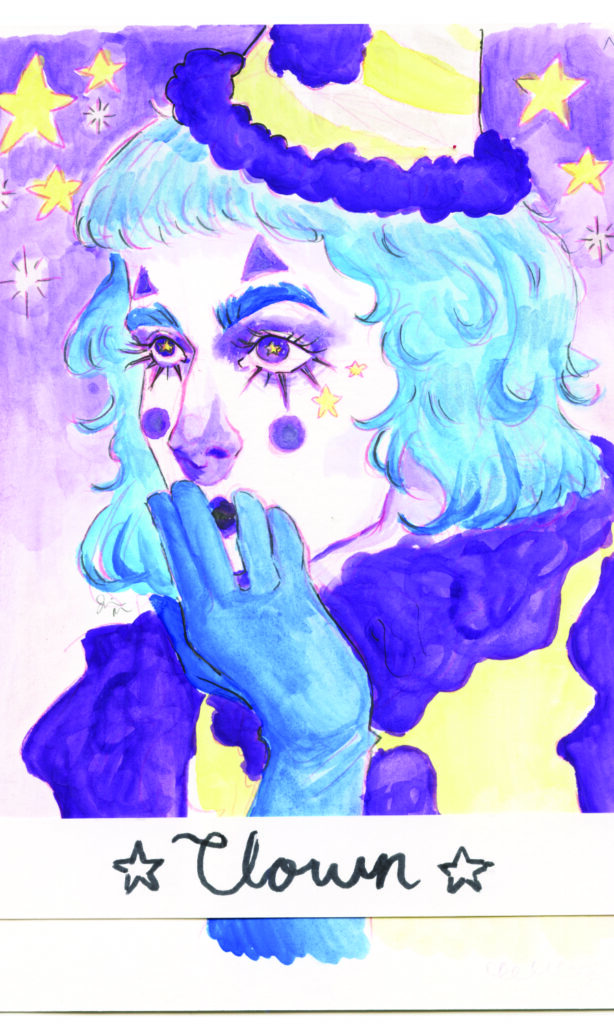
☆ Clown: Don’t take yourself so seriously. Find whimsy all around you.
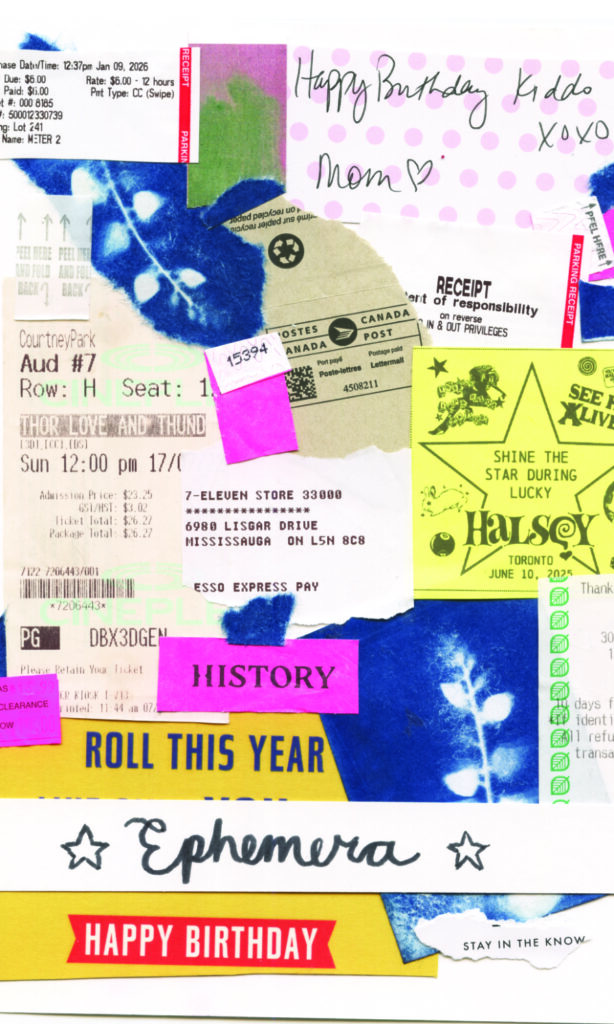
☆ Ephemera: Notice the beauty in the small, fleeting moments. Don’t be afraid to let them go when the time comes.
As a goth queer person, I’ve always been drawn to the vampire. They’re scary, cool, stupid, and I found myself consuming as much vampire content as I could get my hands on from a very young age. Particularly, I was drawn to Anne Rice’s Interview with the Vampire and became fascinated with the different types of vampires written about in that story. They all held core similarities: a lust for blood, aversion to sunlight, and immortality, but otherwise were so incredibly different. This led me down a rabbit hole years ago involving research into the different vampire tropes in media, and I became really obsessed with categorizing the types of vampires I found across film, television, books, and folklore. My search resulted in three main tropes, with a couple off-shoots that were just different enough to justify having their own category.
On a completely separate note, I grew up with unsupervised internet access (duh) that led me, as a queer person, down some darker rabbit holes. As YouTube does to most if one isn’t careful enough, I found myself being pushed by the algorithm to watch LGBTQ+ conservative grifters throughout high school. I believed that it was important to try to understand different perspectives, especially from within my own community. What I got instead was a deep self-hatred regarding my own identity that took years to undo. When I found Interview with the Vampire, and read all of Louis de Pointe du Lac’s deep self-loathing over his vampiric identity, I felt very seen. Vampires are often an allegory for queerness, and I couldn’t help but feel like Louis’ rejection of his vampiric identity was symbolic of one’s rejection of their sexual or gender identity.
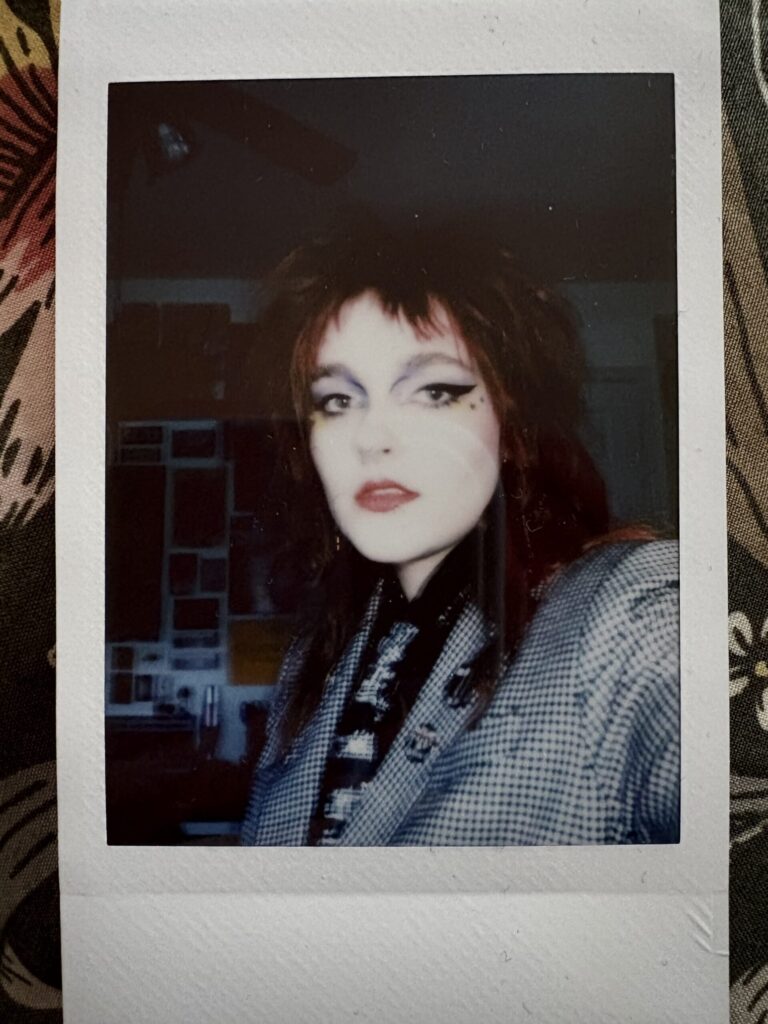
Combining these topics (my obsession with vampire archetypes and my absolute distaste for these Blaire-White-type-queer-grifters), I’ve created a presentation given by a self-loathing vampire, teaching their audience about each archetype and how to kill them. The presentation is mostly informative, but I thought there was a relevant commentary to be made about the kind of people who pander to those who want them dead in hopes that they’ll be deemed “one of the good ones”.
☆ Symposium: Documentation ☆
☆Symposium: Final Bibliography☆
Buffy the Vampire Slayer. Created by Joss Whedon, The WB, 1997.
Doyle, Jude Ellison S. “In Praise of ‘The Lost Boys,’ Everyone’s Favorite ’80s Vampire Movie.” Medium, 25 June 2020, gen.medium.com/in-praise-of-the-lost-boys-everyone-s-favorite-80s-vampire-movie-fd3f2e0ada2d.
Fhlainn, Sorcha Ní. “A Very Special Vampire Episode: Vampires, Archetypes and Postmodern Turns in Late 1980s’ and 1990s’ Cult TV Shows.” Horror Studies, vol. 8, no. 2, Oct. 2017, pp. 255–74. EBSCOhost, https://doi.org/10.1386/host.8.2.255_1.
Girl on Film. The Fashion of Horror: Vampires. YouTube, 25 Feb. 2024, https://youtu.be/QZmgu6igzyA?si=I4WHVkrhvc3qZjir.
Pyle, Jamie. Contacting Anne Rice’s Ghost via Ouija Board. Research Experiment. Conducted 4 Oct. 2025.
Rice, Anne. Interview with the Vampire. Alfred A. Knopf, 1976.
Rymer, Michael, director. Queen of the Damned. Warner Bros. Pictures, 2002.
Stepanic, Stanley. “More ‘disease’ than ‘Dracula’: How the Vampire Myth Was Born.” UVA Today, 19 Oct. 2022, news.virginia.edu/content/more-disease-dracula-how-vampire-myth-was-born-0.
Sumra, Husain. “The Legend of Jure Grando, the First Person Described as a Vampire | by Husain Sumra | Medium.” Medium, 17 Mar. 2015, medium.com/@hsumra/the-legend-of-jure-grando-the-first-person-described-as-a-vampire-13a0e879d6b5.
Schumacher, Joel, director. The Lost Boys. Warner Bros. Pictures, 1987.
☆ Speculative Video ☆
☆ Speculative Video: Artist Statement ☆
The way we currently decipher the everyday lives of long dead societies and peoples is incredibly interesting to me. Perhaps it’s the way that seemingly small objects can tell us so much about what life was like in an era unimaginable to us, the glimpse we can catch into a world as if we’re time travellers, or the fact that we could be so, so, wrong in our analyses. With this concept in mind, I created a video speculating on what it might look like if an alien species tried to understand the culture of Earth through an extremely limited lens: my old Littlest Pet Shop YouTube videos from 2010. As a 7 year old, my understanding of jobs, crime, advertising, and the way people interacted with each other was heavily influenced by what I would see in TV shows, movies, and other people’s “LPS” videos on YouTube. This created a broken telephone effect due to my child self’s limited understanding of the way my own world functioned, and resulted in some truly hilarious videos in retrospect. These videos, still existing on a hard drive, may outlive me due to the digital realm’s increased dominance in our world, so speculating on what a complete outsider might take away from them was an incredibly fun thought exercise. If alien anthropologists could only use a 7 year old’s toy videos to comprehend life on Earth, what would they conclude? When we discover centuries-old artifacts now, could their explanations be as simple as remnants of a child’s understanding of their world?
Fhlainn, Sorcha Ní. “A Very Special Vampire Episode: Vampires, Archetypes and Postmodern Turns in Late 1980s’ and 1990s’ Cult TV Shows.” Horror Studies, vol. 8, no. 2, Oct. 2017, pp. 255–74. EBSCOhost, https://doi.org/10.1386/host.8.2.255_1.
Girl on Film. The Fashion of Horror: Vampires. YouTube, 25 Feb. 2024, https://youtu.be/QZmgu6igzyA?si=I4WHVkrhvc3qZjir.
Pyle, Jamie. Contacting Anne Rice’s Ghost via Ouija Board. Research Experiment. Conducted 4 Oct. 2025.
Rice, Anne. Interview with the Vampire. Alfred A. Knopf, 1976.
Stepanic, Stanley. “More ‘disease’ than ‘Dracula’: How the Vampire Myth Was Born.” UVA Today, 19 Oct. 2022, news.virginia.edu/content/more-disease-dracula-how-vampire-myth-was-born-0.
☆ Sound Object: Documentation ☆
(Left to right, up and down: me holding the cassette tape, the loop of tape hanging from the door because it was so long, the open casing, the hole carved into the side of the case, the tape put back into the case, and then the case closed, recording my epic synth playing skillz, the tape loop in the tape player, the final setup, the community activating the piece, and video documentation of the work being activated)
☆ Sound Object: Artist Statement ☆
It is my belief that community is a vital aspect of music. We band together as a community to make music, we come together in droves to listen to people play music, and now with streaming services, we treat music listening activity like social media. We look in on what each other are listening to, adding to playlists, and thus community is brought into music listening once again. However, one area that hasn’t seemed to tap into this community aspect is analogue forms of music. In my experience, analogue music listening feels like a personal, private, intimate activity — there is a physicality to it, a ritual involved with putting a record on, or playing a CD — and though it’s my personal favourite way of listening to music, there is still that community gap. With my sound object, that gap is filled. The cassette tape loop expands across a large table, inviting the viewers to interact with the object, engaging in the activity of listening to an analogue form of music, while also taking part in the community act of making music itself. Each touch of the tape creates a unique sound, and when everyone plays together, they are creating a song that can only exist through this joint act. Additionally, the tape loop’s tension is held by an Apollo bust (representative of music) and a mushroom (representative of community), and the sound recorded onto the tape is the chord arrangement of a song belonging to the very first album I owned on a physical format.
When I was… A young boy… My mother… introduced me to My Chemical Romance, and I was never cool again. At the age of 12, I broadened this interest to include other bands like Fall Out Boy and Panic! at the Disco, and subsequently engulfed myself in a niche subculture of the internet that is now referred to as the “yeemo” era of 2015-18. We all listened to the same bands, watched the same YouTubers, and were all undeniably cringe. Concurrently, I was losing faith in my Catholic upbringing and education for a myriad of reasons, and emo bands were, at the time, my new religion. I no longer read the Bible alongside my religion class, instead sneaking onto fanfiction websites on my phone under my desk. I looked up to the members of these bands, or the people behind these YouTube channels as though they were my Gods, and I was their most devoted follower. As I grew up, I felt incredibly embarrassed of my pre-teen self and the passion they exhibited for these public figures. But now, as an adult, I continuously find myself drawn to the things I was very not normal about in 2016. With this piece, I am inviting the audience to partake in a distorted, mashed up performance of my 13 year old self’s daily ritual through what I have called “Yeemo Church”. All are welcome.
☆Moments of Magic☆
☆ Symposium Proposal ☆
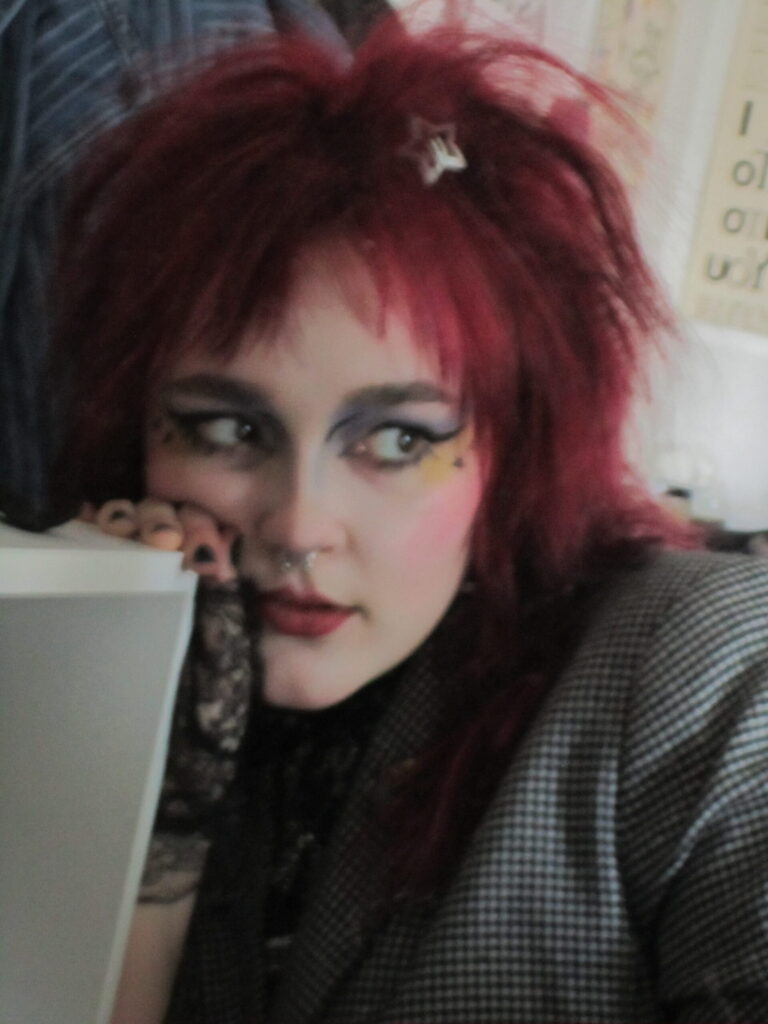
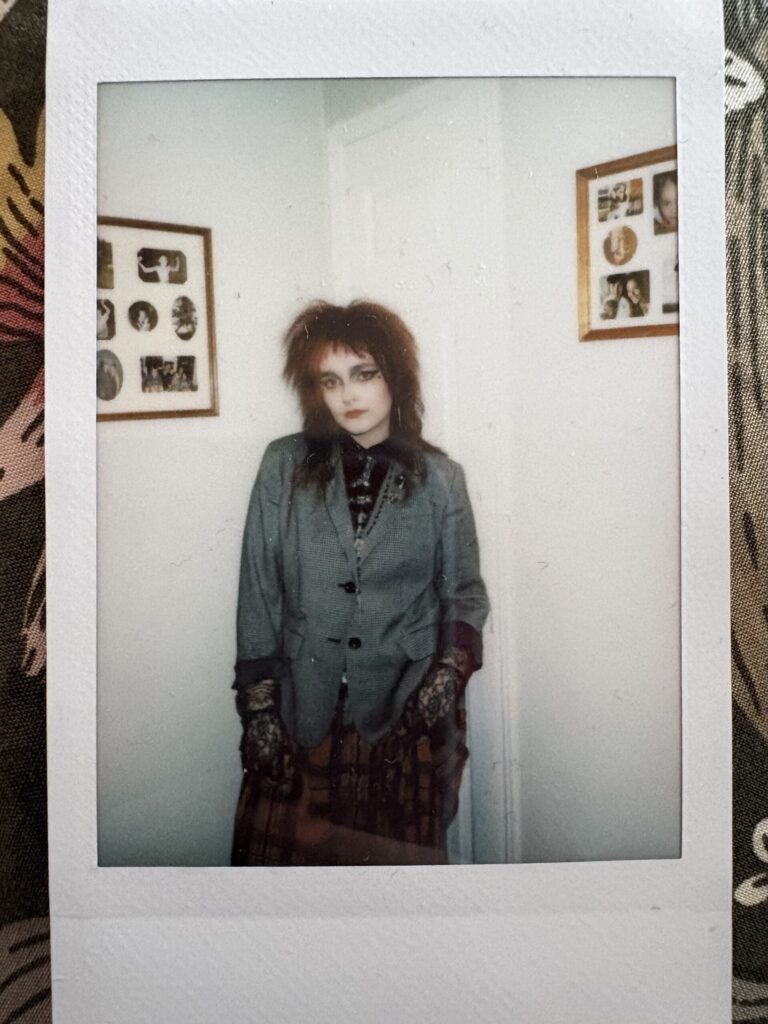
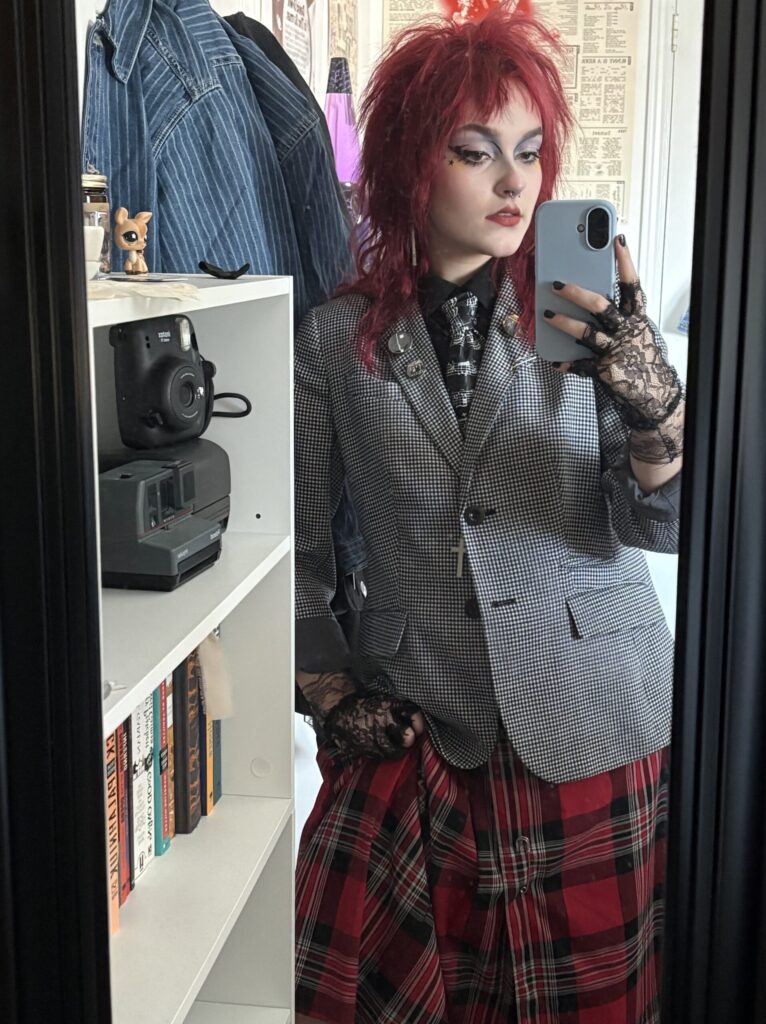
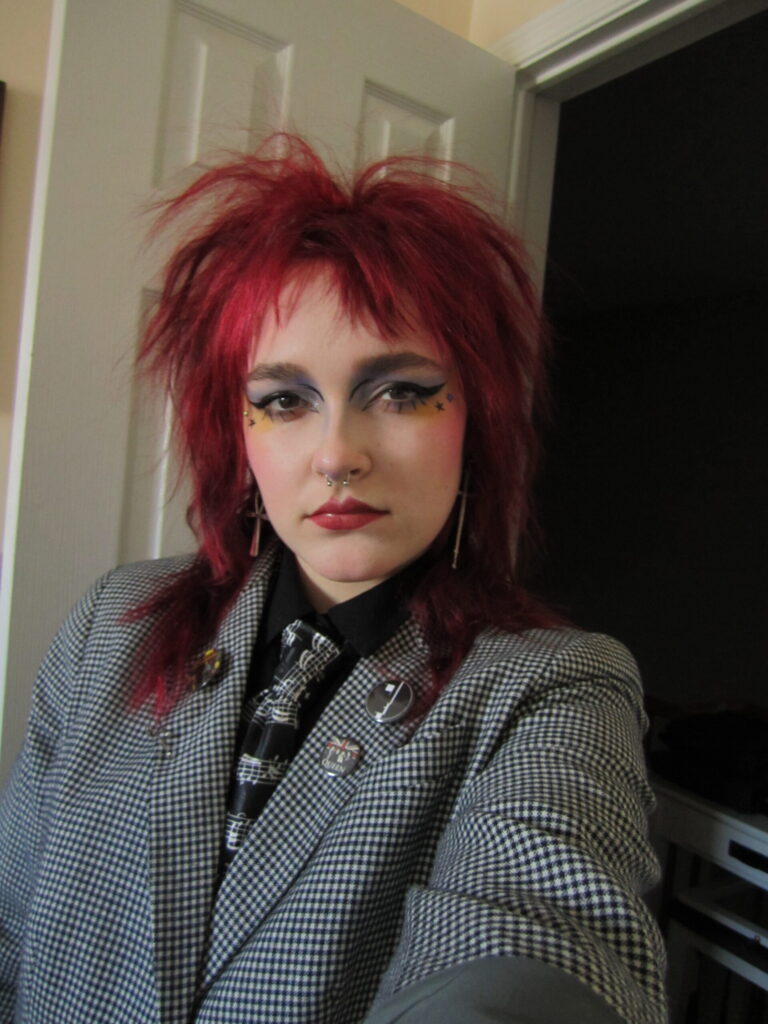
In my symposium presentation, I aim to explore the topic of consumption as intimacy within the context of The Vampire Chronicles novel series by Anne Rice. These books are truly wild, and there’s so much to explore within them! But, I figured that in order to make my presentation fall within the 10-minute time constraint, I should find a super niche subtopic within the books. I’ve always been very fascinated by the use of cannibalism as a metaphor for love within media, and as a lifelong goth, I also love vampires. This topic combines both interests as vampires eat people to survive.
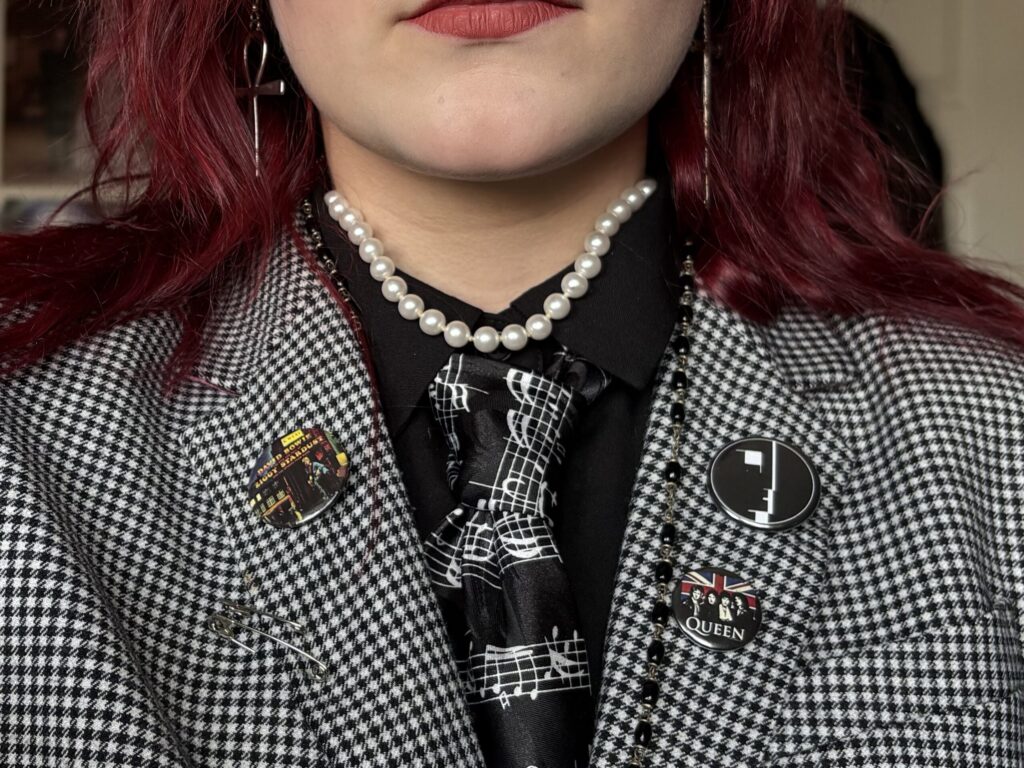
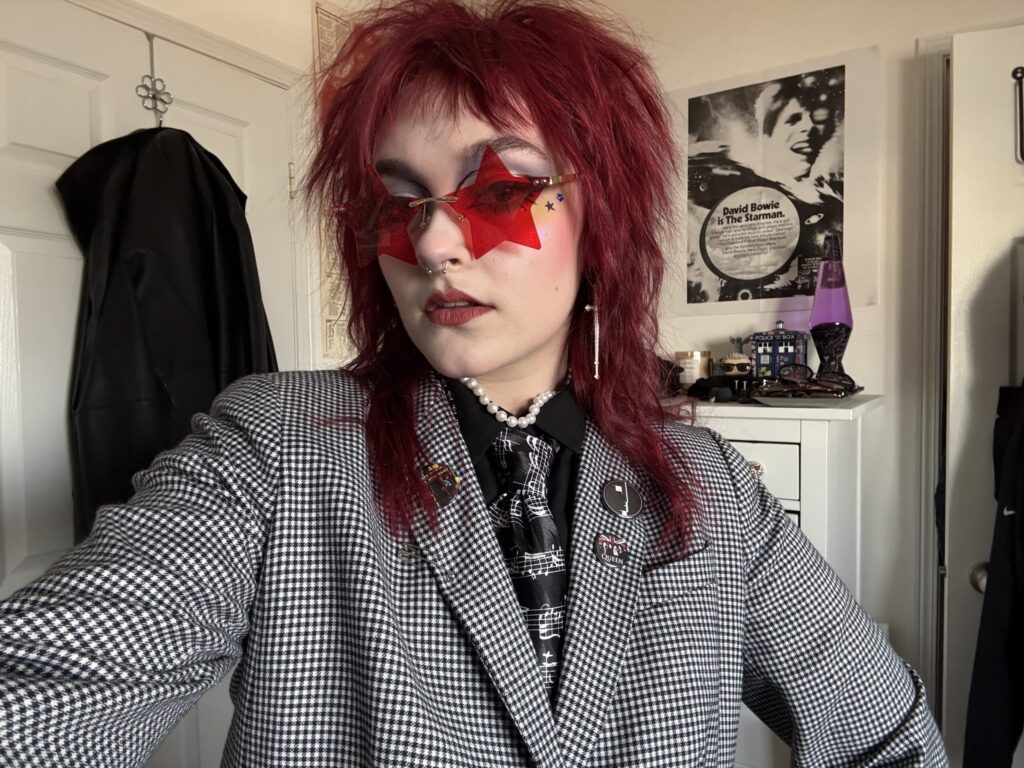
While presenting my topic, I will dress up as and act as though I am literally the vampire Lestat, the main character of the novels (I haven’t decided yet though if I will attempt a French accent – it would be absolutely rotten if I did, but that could add to the bit) and give a slideshow presentation of the following: I will first briefly give context to the books, explaining a basic synopsis of each book (about 1-2 sentences) so that the audience has some background information about characters and themes. But Lestat is a philosopher; he spends the majority of these books pondering questions like: “what is the meaning of immortal life?” or, “what makes someone good or bad?” or, “Why did readers hate book 5 so much? Do they hate me?” Thus, in the spirit of Lestat, I will then propose a question: Is consuming your loved one the height of intimacy? I will look through my various sources of research and in-slideshow examples before coming to my conclusion.
In terms of research, I plan to look at non-vampire based media about cannibalism, academic sources examining vampires and sensuality, as well as some less conventional methods. For example, perhaps making a vampire sim in The Sims 3, finding a lover, and seeing if drinking “plasma” from that sim increases their relationship. One way fans would find out information specifically about the vampires in this book series was by asking Anne Rice herself on her FaceBook. Anne Rice passed in 2021 however, so I might contact her spirit via ouija board to ask. She loved answering questions about her universe, so I’m sure this will yield flawless results!
☆ Brownout 2 and ItalicsResponse ☆
After reading both Guillermo Gomez-Peña’s and Stacy Makashi’s live art scripts, I found myself both inspired and impressed. They both create such a clear image of their performances by just using words and action cues, allowing me to not only visualize what this performance may look like, but to also imagine what it may sound like. There’s a level of care and detail present, but there’s still room for improvisation and audience interaction, and I really appreciate that balance. As a former theatre kid, the way these scripts are laid out reminded me a lot of the monologues I’d read for drama class or auditions. They’re introspective and make room for a broad range of expression. It makes me wish I could experience the performances live; I wonder how the artists may diverge from the way I’d expect certain lines to be said and actions performed, or how the reactions of the audience could alter how the piece is performed.